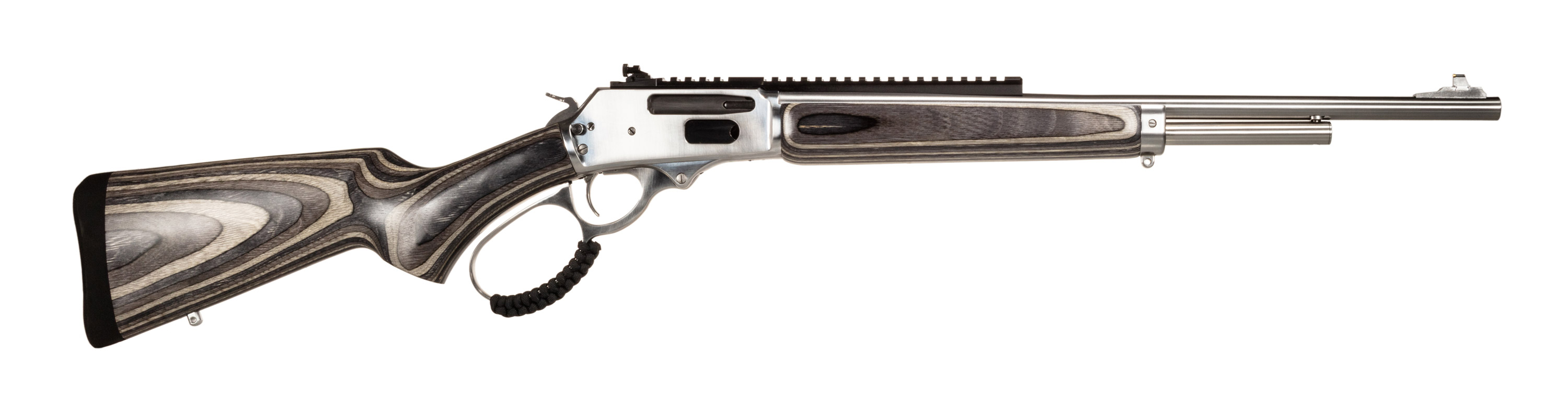
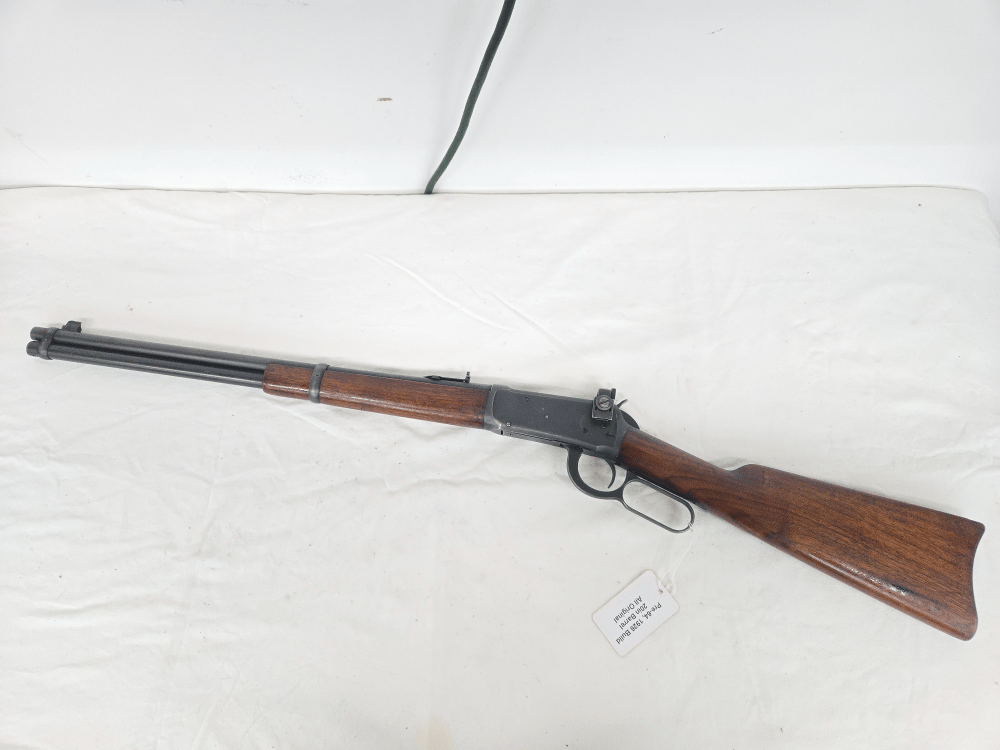
Matching a lever rifle and a revolver in one cartridge
Carrying a rifle and a revolver that fire the same cartridge is an idea older than the cowboy movie. Winchester chambered its Model 1873 for the .44-40 in 1873, and Colt soon offered its Single Action Army in the same round, so a rider needed one kind of ammunition. The reasons still hold. You buy, store and reload one cartridge, you practice with both guns from the same box, and on a cowboy action range you load both from the same belt. This guide covers how to put a pair together without surprises.
The three practical pairings
.357 Magnum and .38 Special
This is the most useful pair for most buyers. Both guns fire mild .38 Special for practice and full .357 Magnum for hogs, deer at short range and general field use. Ammunition is common and costs less than the big-bore rounds.
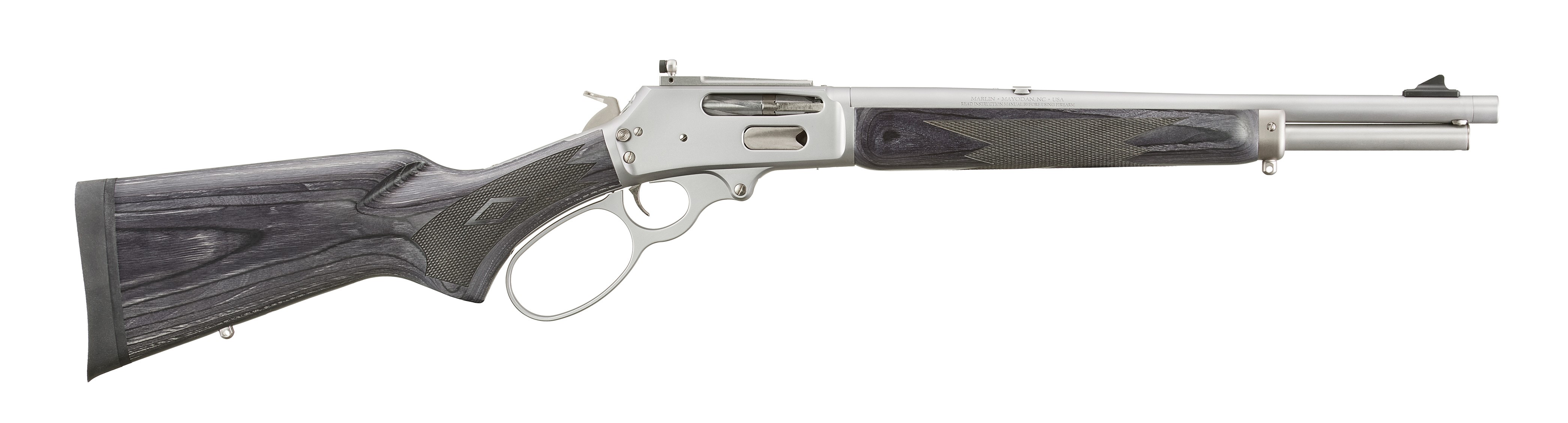
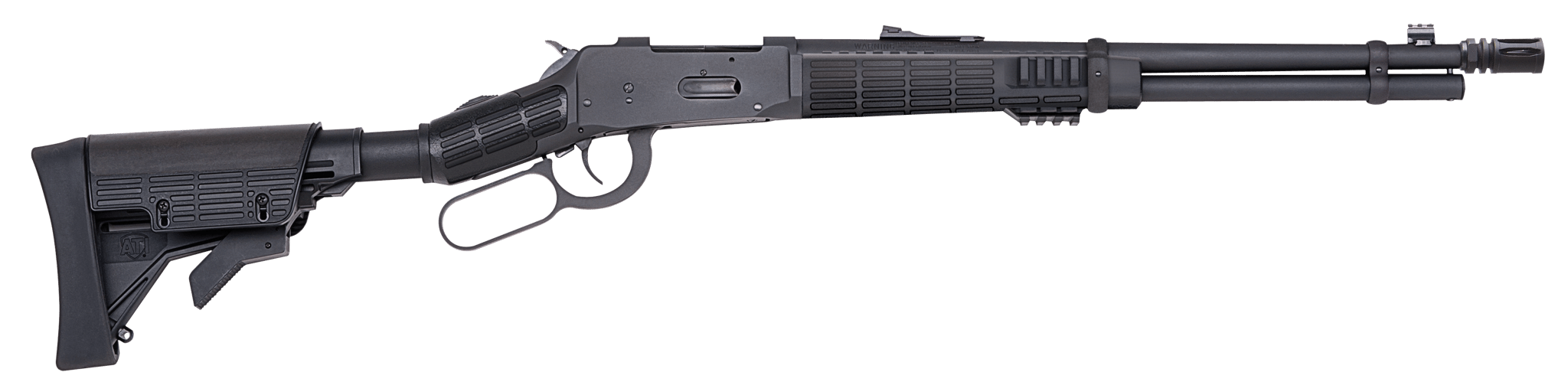
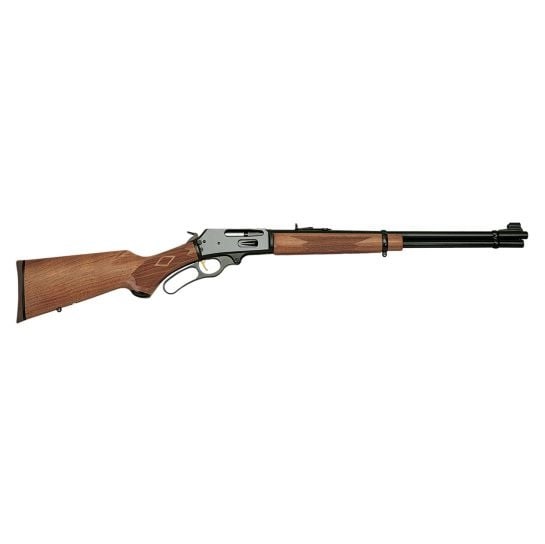
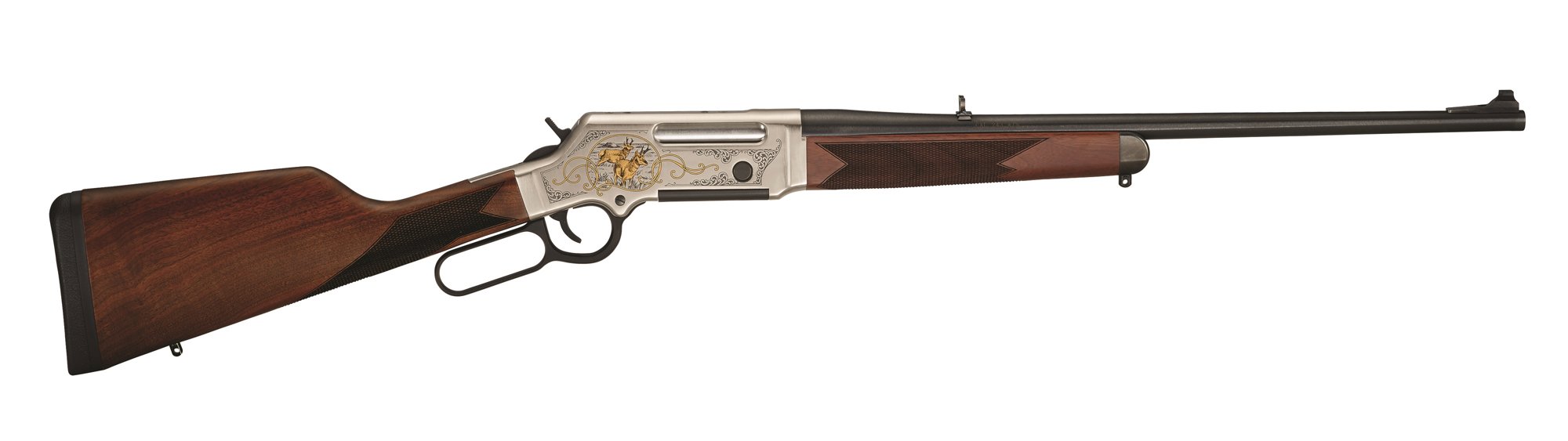
- Rifles: Henry Big Boy and Big Boy Steel, Marlin 1894, Rossi R92, Winchester 1873 and 1892, Uberti, Cimarron and Taylor's 1873 and 1866 replicas, Chiappa 1892.
- Revolvers: Ruger Vaquero, New Model Blackhawk and the double-action GP100, Uberti and Cimarron Cattleman-pattern single actions, Heritage and Traditions Frontier models in .357.
One caution: some rifles feed .38 Special less smoothly than .357 because the shorter case changes how the cartridge lifts. Many shooters run them well, but cycle a few rounds of each before you rely on a rifle for a match.
.44 Magnum and .44 Special
The .44 pair hits harder at both ends. The rifle is a strong deer and hog carbine; the revolver, with full magnum loads, is a serious woods gun. Practice with .44 Special keeps the recoil down.
- Rifles: Marlin 1894, Henry Big Boy, Rossi R92, Winchester 1892.
- Revolvers: Ruger Super Blackhawk and New Model Blackhawk in .44, Uberti and Cimarron models chambered for .44 Special where offered.
Do not confuse .44 Magnum with .44-40. The .44-40 is the original 1873 cartridge and fits 1873 and 1866 replicas and some Colt-pattern revolvers, but it is not interchangeable with .44 Magnum or .44 Special.
.45 Colt
The .45 Colt pair is the traditional cowboy combination. Standard loads are soft-shooting and accurate, and the cartridge has a long record on deer at short range.
- Rifles: Henry Big Boy, Rossi R92, Marlin 1894, Winchester 1873 and 1892, Uberti, Cimarron and Taylor's 1873 replicas, Chiappa 1892.
- Revolvers: Ruger Vaquero and Blackhawk, Colt Single Action Army, Uberti 1873 Cattleman and 1875 Outlaw, Cimarron Frontier and Model P, Pietta 1873.
The .45 Colt is where ammunition labels matter most. Some loads are made only for strong modern revolvers and rifles and are marked that way, sometimes as +P. A Colt-pattern replica or an 1873 rifle is not built for them. Buy standard-pressure .45 Colt for any pair that includes a traditional design, and read both makers' manuals.
Things that do not pair
- .30-30 and .45-70 are rifle cartridges. A few single-shot handguns chamber them, but no traditional revolver does.
- .45 ACP and .45 Colt are different cartridges. Some Ruger Blackhawks come with an extra .45 ACP cylinder, which is a nice option, but no lever rifle in the classic pattern feeds .45 ACP.
- .22 LR and .22 WMR pair well as a rimfire set, such as a Henry lever .22 with a Ruger Wrangler or a Heritage Rough Rider with both cylinders, but each cylinder fires only its own cartridge.
Barrel length and sights
Most buyers of a pair want handling more than ballistics. A 16 to 20 inch carbine is quick to carry and to swing; a 24 inch octagon rifle hangs steady and looks right on a cowboy range. For the revolver, a 4.75 or 5.5 inch barrel balances well and holsters easily, and a 7.5 inch barrel gives a longer sight radius. Fixed-sight revolvers such as the Vaquero and the Colt pattern are what most cowboy categories require; adjustable sights on a Blackhawk are easier to zero for hunting loads.
How velocity changes between the two guns
The same cartridge goes faster from a rifle barrel than from a revolver, often by several hundred feet per second for the magnums. That means the rifle hits harder and shoots flatter, but it also means a bullet designed to expand at revolver speed can behave differently from a rifle. For hunting, choose bullets that their maker rates for the velocity your rifle produces. For practice, any standard load works in both guns.
Cowboy action rules for a pair
The Single Action Shooting Society requires main match rifles to be lever or slide actions of the 1860 to 1899 pattern with a tubular magazine and exposed hammer, chambered for a revolver cartridge of .32 to .45 caliber, and it caps rifle ammunition at 1,400 feet per second and revolver ammunition at 1,000. It also requires all-lead bullets. In practice, competitors use light .38 Special or .45 Colt loads in both guns. The cowboy action starter guide lists the categories and the rest of the kit.
Buying a pair from us
Both guns ship to the licensed dealer you choose. Rifles transfer at 18 and revolvers at 21 under federal law, and some states add a permit, a waiting period or a minimum age of 21 for all firearms; our state-by-state buying guide lists them. Ordering both in one cart means one shipment and, at most dealers, one visit, though many dealers charge a transfer fee per firearm.
Browse .357 rifles and revolvers, .44 Magnum or .45 Colt, or see the cartridge guide if you are still deciding.
General information, not legal advice. Current as of September 2026. Laws change; check the official source before you act.