Single-action revolver safety: one empty chamber or six loaded
Ask about loading a single-action revolver and someone will answer load one, skip one, load four, cock, lower the hammer. That old routine leaves the hammer resting on an empty chamber, and on many single actions it is the only safe way to carry. On others, a modern transfer bar changes the answer. The rule that matters is simple: know which design you own and follow its maker's manual. This guide explains the difference. It is general information, not a substitute for the instruction manual that came with your revolver.
Why the traditional design needs an empty chamber
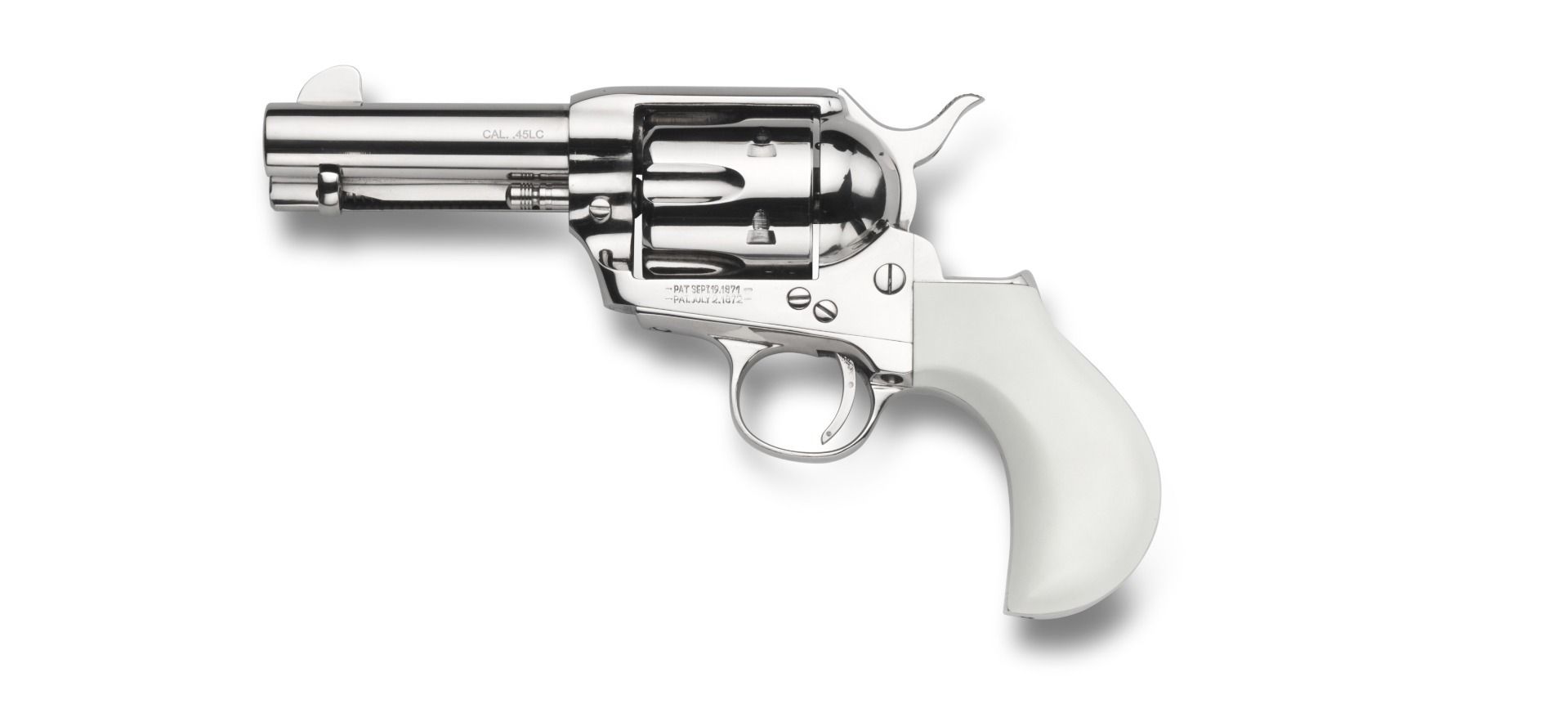
On a Colt Single Action Army and on most faithful replicas of it, the firing pin is fixed to the hammer. When the hammer is all the way down, the pin rests on the primer of whatever cartridge sits under it. A hard blow to the hammer, such as a drop onto its spur, can fire that round. The safety and half-cock notches on these guns are small and can break or be bypassed. So the long-standing practice is to carry five rounds in a six-shot cylinder with the hammer down on the empty sixth chamber.
This applies to the Colt SAA and to most Uberti, Cimarron, Pietta, Taylor's and Traditions copies of the 1873 Colt and the 1875 Remington, unless the manual for your model says otherwise. Some replicas have added safety features, and their manuals explain how to use them.
What a transfer bar does
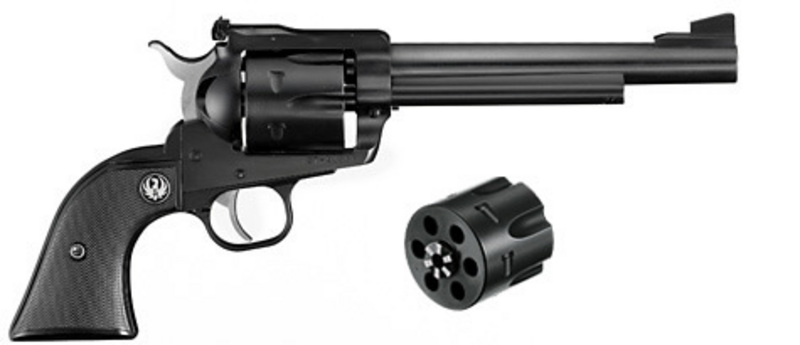
Ruger introduced its New Model single actions in 1973 with a transfer bar. The hammer cannot reach the firing pin unless the trigger is held fully back, which raises a bar between them. With the trigger released, a blow to the hammer is not passed to the firing pin. That is why a New Model Ruger, including the Vaquero, Blackhawk, Super Blackhawk, Single-Six and Wrangler, is designed to be safe with all six chambers loaded. Ruger's manuals still list warnings for each model, so read yours.
Ruger single actions made from 1953 through 1972, the so-called Old Models with three screws in the frame, do not have a transfer bar. Carry those with the hammer on an empty chamber. For years Ruger has offered owners a free conversion to the transfer bar system; ask Ruger whether the offer still applies to your gun.
Other designs
- Heritage Rough Rider: the .22 Rough Rider has a manual hammer-block safety. Read the Heritage manual for how it is meant to be used when carrying and loading.
- Chiappa and other .22 replicas: designs vary. Follow the manual that came with the gun.
- Percussion revolvers: cap-and-ball replicas such as the 1858 Remington have their own loading procedure and are usually carried with the hammer between chambers or on an uncapped chamber, as the manual directs.
Loading a traditional single action, step by step
- Point the revolver in a safe direction with your finger off the trigger.
- Bring the hammer to the loading notch, usually the second click, and open the loading gate. The cylinder now turns freely in one direction.
- Load one chamber, skip the next, then load four more. You now have five rounds and one empty chamber.
- Close the gate. Bring the hammer to full cock, then hold it with your thumb, press the trigger and lower the hammer gently all the way down.
- Check through the gate or by eye that the hammer sits over the empty chamber.
Unloading is the reverse: hammer to the loading notch, gate open, then push each case out with the ejector rod as you turn the cylinder.
Loading a Ruger New Model
On a New Model Ruger, opening the loading gate frees the cylinder to turn with the hammer fully down; there is no loading notch. Load the chambers you intend to load, close the gate and the gun is ready. Opening the gate also locks the hammer. That is the main handling difference that confuses people who learned on a Colt pattern: do not try to half-cock a New Model to load it.
Cowboy action rules are stricter
The Single Action Shooting Society requires every six-shot revolver to be loaded with five rounds and the hammer down on the empty chamber at the loading table, whatever its design. A five-shot revolver must rest on a dummy chamber or safety slot. A cocked revolver may never leave your hand, and you may not move with a live round under the hammer. See the cowboy action starter guide.
Holsters and handling
- Use a holster that covers the trigger and holds the revolver through normal movement. A strap over the hammer adds security for riding or hunting.
- Never fan the hammer or slip it on an unknown gun. SASS forbids fanning on its ranges.
- Keep the muzzle in a safe direction while drawing and holstering, especially with cross-draw holsters.
- Store revolvers unloaded and locked, away from children, and follow any storage law where you live.
Ammunition and pressure
Colt-pattern replicas are built for standard-pressure loads. Ammunition marked for modern strong revolvers only, or +P, belongs in the guns their makers approve for it, such as some Ruger Blackhawks in .45 Colt. Lead cowboy loads are the gentlest choice for practice and matches. Our pairing guide covers ammunition for a matched rifle and revolver.
Picking a revolver with this in mind
If you want to carry a single action for ranch work or hunting with six rounds, a transfer-bar Ruger is the simple answer. If you want the look and feel of the 1873 Colt, a Uberti, Cimarron or Pietta copy is faithful to it, and five rounds with the hammer down on an empty chamber is part of owning one. Browse Ruger Vaquero, Blackhawk, Wrangler or 1873 Cattleman listings. Every revolver ships to your FFL dealer for pickup at 21.
General information, not legal advice. Current as of September 2026. Laws change; check the official source before you act.