Choosing a lever-action rifle by cartridge
Most people who shop for a lever gun start with a maker. It works better to start with the cartridge. The cartridge decides what you can hunt, how far you can shoot well, what the ammunition costs and whether a revolver can share it. Once the cartridge is settled, the choice between a Henry, a Marlin, a Winchester, a Rossi or an Italian replica gets much easier. This guide walks through the six chamberings that cover nearly every lever rifle on our shelves, from the .22 to the .45-70.
One rule applies to every tube-fed lever gun: the cartridges ride nose to primer in the magazine, so the point of one bullet rests on the primer of the next. Use flat-nose, round-nose or soft flexible-tip bullets made for tubular magazines, never pointed spitzer bullets. Every factory load sold for these cartridges follows that rule, but it matters if you handload or buy surplus.
.30-30 Winchester: the deer rifle most of America grew up with
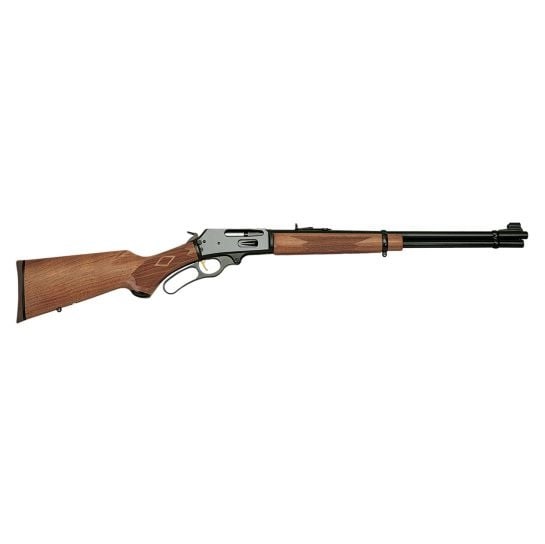
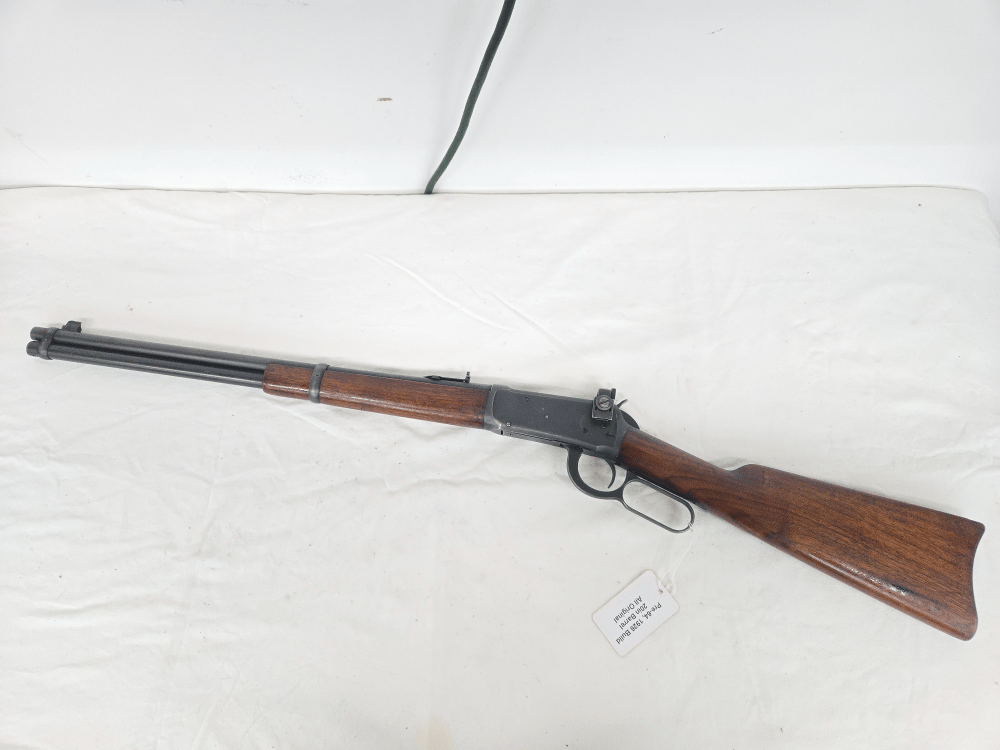
The .30-30 arrived in the Winchester Model 1894 in 1895 as one of the first smokeless sporting cartridges, and it has probably taken more whitetail than any other round. A 150 or 170 grain bullet at roughly 2,200 to 2,400 feet per second from a 20 inch barrel drops deer cleanly out to about 200 yards. Recoil is mild, ammunition is on every store shelf in deer country, and the rifles are light and short enough to carry all day in timber.
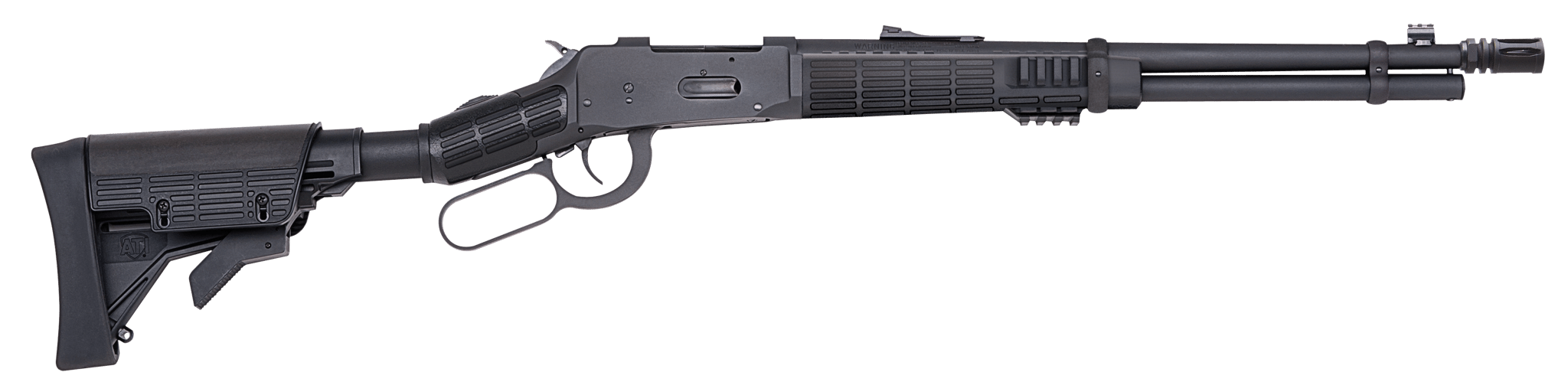
The classic .30-30 rifles are the Marlin 336, the Winchester 1894 and the Henry, in both brass and steel side-gate versions. The Marlin and the Henry side-gate models eject to the side, which leaves the top of the receiver free for a scope. The .30-30 is a rifle cartridge, so no revolver shares it, and it is not legal in cowboy action main matches.
Choose it if: you hunt whitetail or black bear in woods and brush, want a rifle you can buy ammunition for anywhere, and do not need a matching handgun. See the .30-30 rifles in stock.
.357 Magnum and .38 Special: the most versatile pair
A lever rifle in .357 Magnum also fires .38 Special, and that pairing is the reason the chambering sells so well. Light .38 Special target loads are quiet, cheap and nearly recoil free, which makes them ideal for new shooters, for teaching children and for cowboy action matches. Full .357 Magnum loads gain several hundred feet per second from a rifle barrel over a revolver, enough for hogs and deer at short range when you choose a bullet built for game.
Rifles in this chambering include the Henry Big Boy and Big Boy Steel, the Marlin 1894, the Rossi R92, the Winchester 1873 and 1892, and Italian 1873 and 1892 replicas from Uberti, Cimarron, Chiappa and Taylor's. Pair any of them with a Ruger Vaquero, Blackhawk or GP100, or a Colt-pattern single action, and one box of ammunition feeds both guns. Our rifle and revolver pairing guide covers that in detail.
Check your state's deer rules before you hunt with a .357. Some states set minimum caliber, case length or energy figures, and others list allowed cartridges by name. Where it is legal, keep shots to about 100 yards.
.44 Magnum and .44 Special: more bullet, same idea
The .44 Magnum does what the .357 does with a heavier bullet. A 240 grain bullet from an 18 to 20 inch barrel hits harder than many people expect and is a proven deer and hog round inside about 125 yards. The rifle also fires the milder .44 Special, which is pleasant for practice. Recoil in a rifle is modest; the same load in a revolver is a handful.
The Marlin 1894, Henry Big Boy, Rossi R92 and Winchester 1892 all come in .44 Magnum. The Ruger Super Blackhawk is the classic matching revolver, and the Ruger Redhawk and Smith and Wesson Model 29 double actions also share it. The older .44-40 Winchester is a different cartridge from the 1873 era; it suits original-style replicas but does not interchange with .44 Magnum.
.45-70 Government: the big-bore lever gun
The .45-70 began as the 1873 Army trapdoor cartridge, and in a modern lever rifle it is a heavy-game round with a reach of about 150 to 200 yards. Ammunition comes in very different pressure levels. Low-pressure loads, often marked as safe for trapdoor Springfield rifles, are mild and accurate. Loads made for modern lever rifles such as the Marlin 1895 push heavier bullets much faster. Use only factory ammunition that the maker of your rifle approves for it, and read the box.
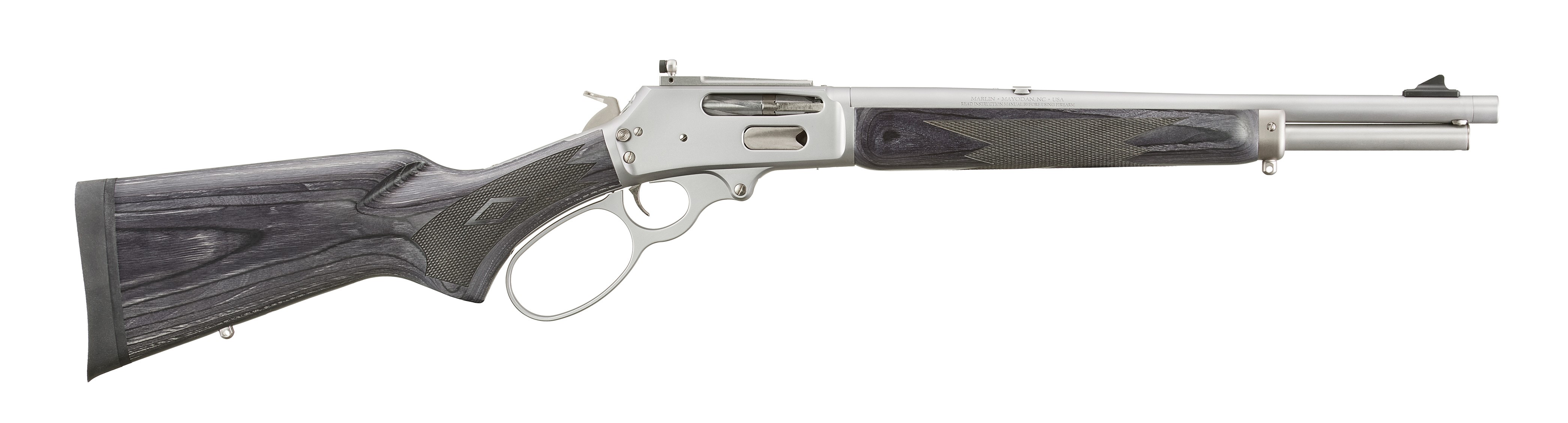
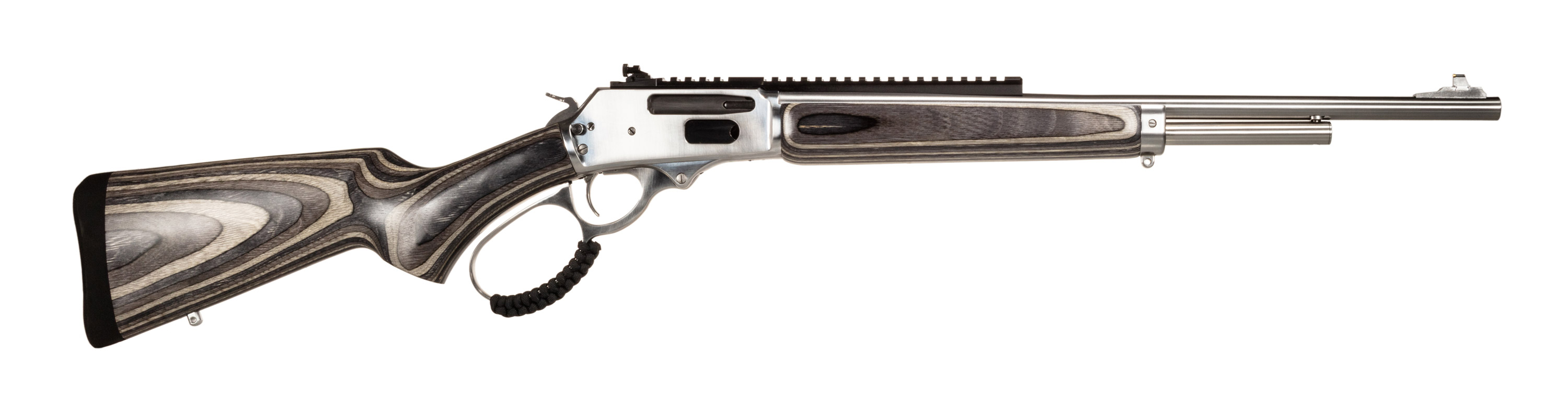
The Marlin 1895 family, including the stainless 1895 SBL with its large loop lever, is the best-known .45-70 lever gun. The Henry in brass, steel and side-gate versions, the Rossi R95, the Winchester 1886 and the Smith and Wesson 1854 also chamber it. States that limit deer rifles to straight-wall cartridges, such as Ohio, Indiana, Iowa and parts of Michigan, often allow the .45-70, .357, .44 Magnum and .45 Colt, but some also cap caliber or case length. Check the current rules in the state you hunt.
Choose it if: you hunt elk, moose, bear or big hogs at moderate range, or you want a guide-style rifle for country where large animals are close. See the .45-70 rifles in stock.
.45 Colt: the original revolver round in a rifle
The .45 Colt was introduced with the Colt Single Action Army in 1873, and it is still the defining cowboy action cartridge. Standard loads push a 250 or 255 grain bullet at moderate speed with a gentle push rather than a sharp kick. In a rifle it is a capable deer round at short range. Some ammunition is marked for modern strong revolvers only, sometimes as +P; keep those loads out of Colt-pattern replicas and 1873 toggle-link rifles, and follow the rifle and revolver makers' guidance.
The Henry Big Boy, Rossi R92, Marlin 1894, Winchester 1873 and 1892 and many Uberti and Cimarron rifles come in .45 Colt. The matching revolvers include the Ruger Vaquero and Blackhawk, the Colt Single Action Army and the Uberti, Cimarron and Pietta Colt replicas.
.22 LR and .22 WMR: the practice lever gun
The Henry Classic and Golden Boy, the Browning BL-22 and similar rimfire lever rifles teach the same lever stroke for a fraction of the ammunition cost. They are the right first rifle for a young shooter, a good squirrel and rabbit gun, and a cheap way to practice. Match one with a Ruger Wrangler, a Heritage Rough Rider or a Chiappa 1873 .22 revolver and you have a rimfire pair. Rimfire is not legal for deer anywhere in the country.
What about the Browning BLR?
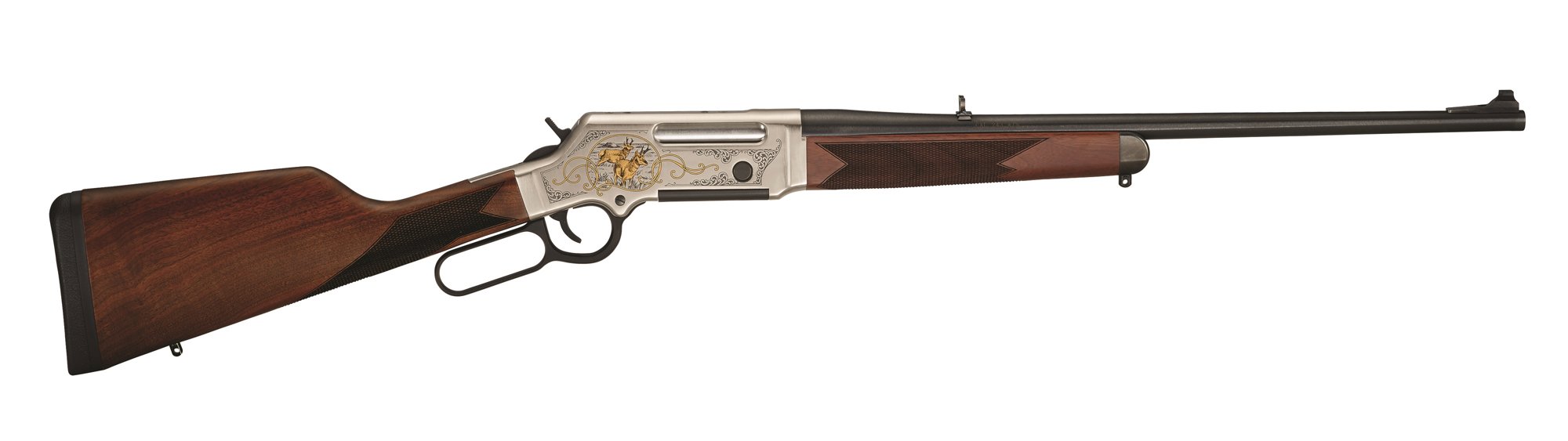
The Browning BLR is a lever-action rifle with a rotating bolt and a detachable box magazine, so it can fire pointed bullets in modern rifle cartridges such as .243, .308 and .30-06. That makes it a long range lever gun for open country, but it is not a cowboy rifle and it does not share ammunition with any revolver.
Quick picks
- Whitetail in the woods: .30-30 in a Marlin 336, Winchester 1894 or Henry.
- One cartridge for rifle and revolver: .357 Magnum or .45 Colt.
- Hogs at feeder range: .44 Magnum or .357 with a bullet built for hogs.
- Elk, bear and big game in timber: .45-70 in a Marlin 1895 or Henry.
- Cowboy action: .38 Special in a .357 rifle, or .45 Colt. Read our cowboy action starter guide.
- First rifle: a .22 LR lever gun.
Every rifle here ships to the FFL dealer you choose, where you complete Form 4473 and the background check at 18 or older. Compare the makers in our Marlin, Henry, Winchester and Rossi comparison, or browse the whole catalog.
General information, not legal advice. Current as of September 2026. Laws change; check the official source before you act.